

What to see and do at Hekla Volcano?
1) Hike up Hekla via the summit trail, when conditions allow
The signature experience here is hiking to the summit of an active volcano. From a four-wheel-drive track off the F225, Landmannaleið, you quickly gain elevation in a raw landscape, where pumice crunches under your boots and the air smells of volcanic dust warmed by the sun. The climb is demanding and, in good weather, not especially technical, but the wind exposure is very real.
The scenery shifts with every turn, black ash, brick-red scoria, lingering snowfields. On a clear day, the reward is spectacular, with sweeping views over the highlands, the southern plains, and distant ice caps. Start early, bring warm layers and a windbreaker, and check locally for volcanic activity and weather conditions. Keep in mind that Hekla has one of the shortest eruption warning times in Iceland, sometimes less than an hour.
2) Explore the craters and lava fields on Hekla’s slopes
The best way to “read” Hekla is to walk through its scars, craters, lava flows, and tephra fields. You don’t have to aim for the summit. Shorter routes cross lunar-like terrain, with rocks as light as cork and colors shifting from black to rust. The silence is striking, broken only by the rush of the wind and the crackle of scoria underfoot.
These outings are perfect for slowing down, noticing textures, spotting the mosses gradually reclaiming the lava, and sensing just how alive this landscape is. A local guide is invaluable for choosing a loop suited to the day’s conditions and avoiding unstable areas, especially after rain or periods of thaw.
3) Spend a day in Landmannalaugar, among rhyolite mountains and hot springs
Near Hekla, Landmannalaugar offers some of Iceland’s most beautiful hiking terrain, with multicolored mountains and natural hot springs. You usually reach it by the highland tracks, depending on the season, and the arrival is a visual jolt, sulfur yellows, moss greens, pinks, and pearl grays, like a watercolor laid over black lava. Loops of two to four hours already give you a wonderful taste of the area.
After the hike, slip into the natural pool, warm water, light steam, skin pleasantly tingling. It’s simple, social, and very Icelandic in spirit. To avoid the busiest times, go early in the morning or later in the day, and choose lesser-known trails recommended by local agencies.
4) Take in Hekla from Þjórsárdalur Valley and its historic farms
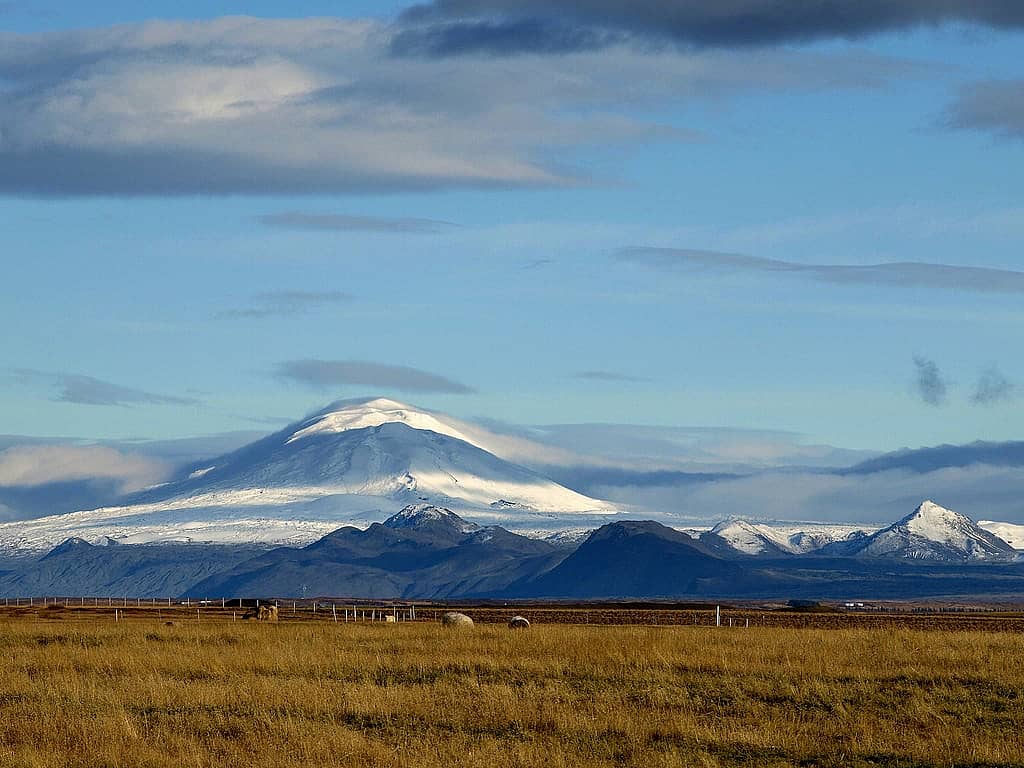
For a gentler approach, Þjórsárdalur Valley is ideal, with wide-open views of Hekla and history right at ground level. Here, meadows roll gently, dwarf birches tremble in the wind, and the volcano rises in the distance like a constant presence. Stop at Stöng and the reconstructed Þjóðveldisbær farmstead to imagine Icelandic life in the age of the sagas, before eruptions reshaped the region.
This is a great area for a family day out, with short walks, archaeological sites, and photo stops. In the late-afternoon sun, low light catches Hekla’s dark slopes, and you understand why it inspired respect and legends for so long.
5) Follow a scenic route to Háifoss and Granni waterfalls
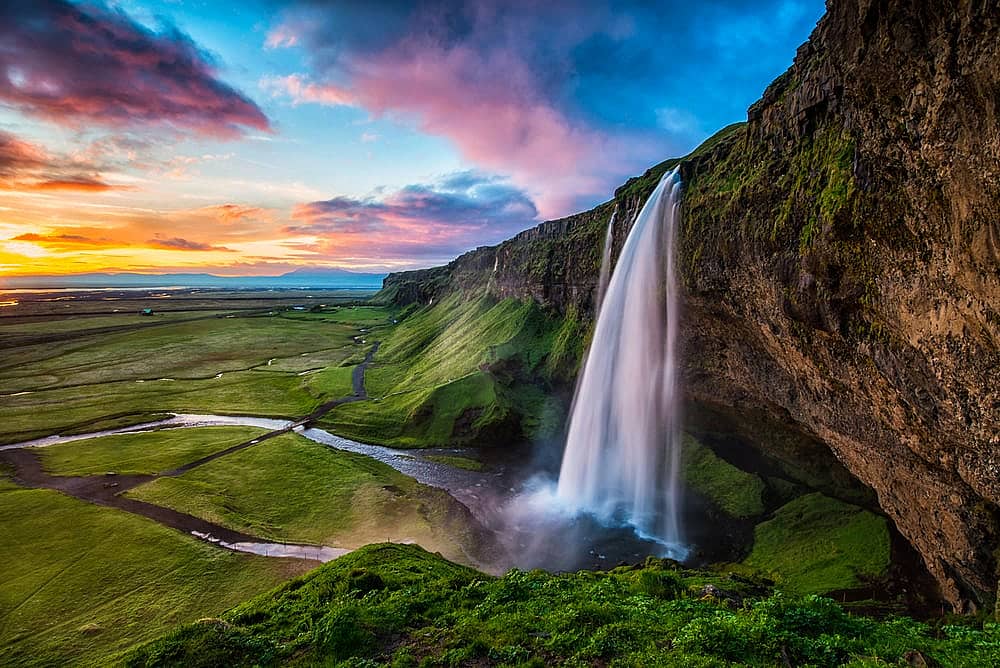
Just a short distance from the massif, the twin waterfalls of Háifoss and Granni are well worth the detour, with dramatic views and cool spray in the air. The track leads to a viewpoint where water plunges into a deep canyon, its low roar echoing off the walls. On a clear day, the mist catches the light, and fluorescent moss contrasts with dark ash and basalt, a scene that feels unmistakably like Iceland’s interior.
Stay on marked trails, as the ground can crumble near the edges, especially after rain. For a quieter experience, come outside peak hours and take time to listen, to the falls, the wind, and the vast silence between gusts.
Our tips for discovering Hekla volcano
Can you hike Hekla volcano?
Yes, you can hike Hekla volcano, but only when conditions and safety alerts allow it. This is a stark mountain, often battered by wind, where you walk over black ash and pale pumice, with a true edge-of-the-world feeling.
The classic route starts from the Skjólkvíar parking area, on Route 26, and climbs to the summit on a marked but very exposed trail. Allow four to six hours round-trip, depending on your fitness and the weather, with a steady elevation gain, unstable sections, and sometimes lingering snowfields. The best season runs from late June to early September. Before you go, check SafeTravel alerts and the weather forecast, as wind and fog can move in fast here. Remember that Hekla’s eruption warning time is one of the shortest in Iceland, sometimes less than an hour.
Where can you see Hekla volcano?
To see Hekla volcano, head for Route 26, Sprengisandur, near the Rangárvellir farms, where its dark silhouette often stands out against a huge sky, with the smell of damp grass and wind sweeping across the plains. In clear weather, the natural viewpoint near Leirubakki offers a wide, easy view. If you’re looking for a wilder angle, drive to Hrauneyjar by the reservoir, where Hekla appears in the distance, austere and magnetic.
Plan a stop at Hekla volcano on a tailor-made trip to Iceland
With Evaneos, you’ll be connected with a local, English-speaking specialist based in Iceland. Someone who knows the roads, the weather, the best times to avoid crowds, and who can respond quickly if conditions change. It’s a more relaxed way to travel, with real, on-the-ground advice.
Dreaming of a tailor-made trip to Hekla volcano? Your local expert can adjust the stops, driving times, and accommodations to match your interests, hot springs, hikes, fjords, and share their favorite local places along the way. You save time, and you experience Iceland from the inside.